SymbolShift
-
Posts
186 -
Joined
Everything posted by SymbolShift
-
I don't drink coffee myself, but if I did... that is 100% the mug I would use 😀
-
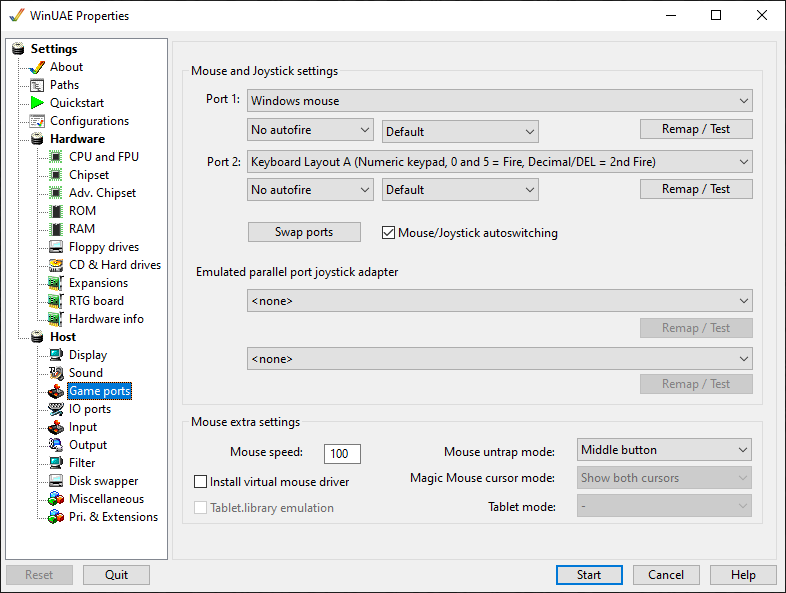
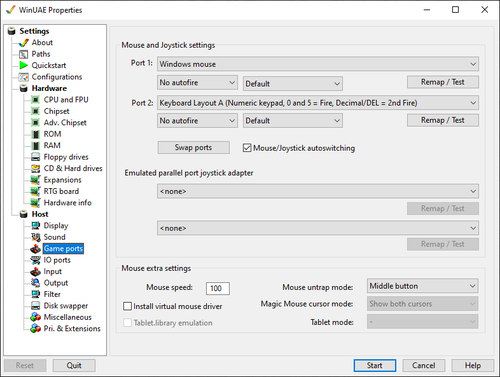
I'm running WinUAE 4.10.1, with a Quickstart A500 config. Once booted, select "Start Game" on the Subway screen, by just moving the mouse up and down to hi-light it, then left clicking. After that you are presented with the "Please Select" screen, select either Manic Miner, Manic Miner II, or Credits. You can select these by using 8 (for up), and 2 (for down) on the numeric keypad, then 0 to select. I did not see any graphical issues in this version. During the game, using numeric keypad, 4 is left, 6 is right, and 0 is jump. Below are my Game ports settings... (this may already be set as default)
- 5 replies
-
- 1
-

-
- manic miner
- amiga
- (and 1 more)
-
Interestingly, there was a 1990 Amiga release of Manic Miner by Software Projects. This also included a conversion of the original Manic Miner (mentioned above) and also Manic Miner II, which was much enhanced. ADF file is attached. Below is a long-play video of both versions... Manic Miner (1990)(Software Projects)[cr Subway][t +4 Subway].adf
- 5 replies
-
- 2
-
-

-
- manic miner
- amiga
- (and 1 more)
-
40th anniversary documentary on the ZX Spectrum.
SymbolShift replied to Paolo's topic in News / Feedback
Does anyone know the latest on this being released? Initial release was December 2022. The Kickstarter mentions updates, but never specifies an actual release date. Since the 40th anniversary was April 2022, it's becoming more of a 41st anniversary 😁 Talking of anniversaries, it's the 40th for MM this summer, hopefully there are big plans for that! -
Love it. I tried to find a better photo of this on Google Images... p.s. Don't do it.
-
Not had too much time recently to pursue my exploration. One quibble I did have (which may not be fixable), was that I would love to have the desktop version minimized, so i can keep it open and explore at my leisure. I can press Alt-Enter, which reduces from fullscreen to windowed mode, and then minimize it. However, once minimized (for some weird reason), it disables my screensaver and monitor standby functions, and my monitor stays on forever with JSW3 open. Not sure if Stencyl has any control over this behaviour? Also, the windowed mode is a little small, if there was an option to double that size, that would be fantastic. Whining aside, it's a great game!! 😁
-
III and 3 are not the same thing.... I'm just kidding 🤣
-
Lol, totally! I wrote mine in Gamemaker and the stairs were a nightmare, especially the jump-through aspect. My code still won't jump-through on every attempt, but even the original has that quirk! 😁
-
That's great! In 2016, I wrote an unreleased game called "Basteroids" in Stencyl. I found it pretty intuitive and powerful. I attempted a JSW clone at the time in Stencyl, but never got very far with it. You must have jumped through quite a few "technical hoops" to mimic the original game play. Well done for getting that achieved!
-
This happened in Firefox. I've tried it in Edge, and seemed to work okay. However, I tried in Firefox again, and could not reproduce.
-
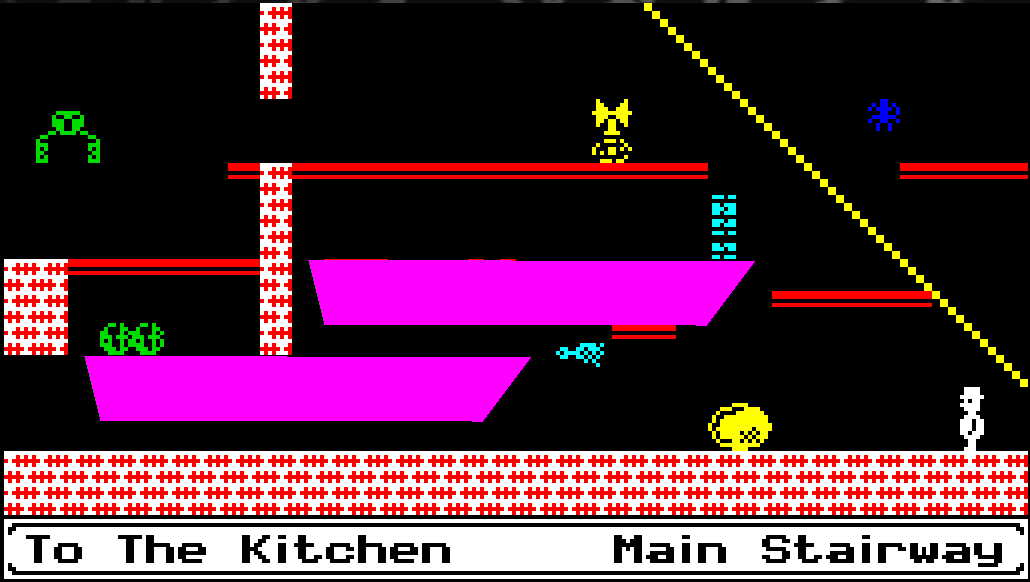
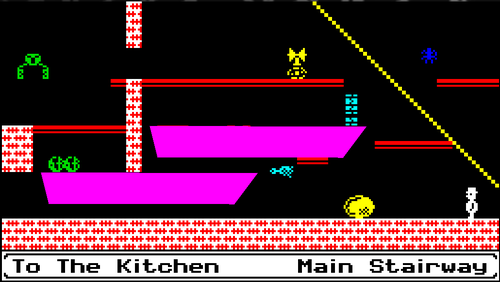
Actually, I'm starting to notice the random lockups now and then, just for a few seconds here and there. Also, a weird thing happened when I entered "To the Kitchens Main Stairway", the areas (in pink) started colour cycling, like the collect items.
-
Great game Pixel Stonk! I'm still exploring at the moment, but so far so good! I didn't notice any lag problems either, but a downloadable version would be nice to have. Looking forward to exploring more. From a technical standpoint, what creator/engine/language did you write this in? BTW - Excellent work!! Will keep you posted of any issues I come across.
-
I could not agree more! OOP has always done my head in. I totally understand it's advantages in certain areas, but there's something about my logic that makes more sense with Procedural programming. I loved VB5/VB6 when it was procedural, but they transitioned to OOP with VB.net and everything went to pot. Blitz Basic was another procedural language that I was a fan of. In the last few years I've been forced into using GameMaker, just out of lack of other options really. I've mostly got used to it, but I still find it limiting in certain areas that even AMOS and Blitz excelled at. I used Stencyl several years back, and managed to remake one of my old Amiga games, but found it frustrating to do certain things since it's drag-drop rather than code.
-
Nice one! That racing game you mention sounds like one I started, but never finished. It was called "Micro F1". Basically a rip-off from Micro Machines in the early 90's, with a Formula one twist 😁 The thing that I loved about AMOS was it was not too intimidating as a beginner. Most languages nowadays are way to intimidating to get beginners started. I learned VB5 for the same reason.
-
I believe that Damien McFerran was only the reviewer of the game, not the developer. A review I strongly disagree with, especially the line "Willy was challenging and exciting. Standards have moved on since then." 😬 From what I can figure out... The game was developed in 2004 by a UK software house called Numfum (now exists as Numfum GmbH in Switzerland). Game credits go to: Paul Vera-Broadbent (lead artist?), Scott Watson, Adrian Brown and Carl Woffenden.
-
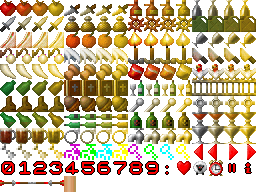
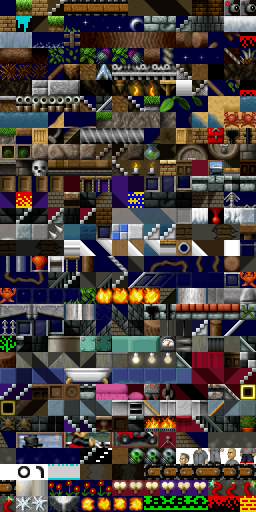
A .jar file is basically an archive. You can open this with something like WinRAR. Inside that, the files ti.dat and ov.dat are just renamed .png files. The author simply disguised the files rather than encrypting any data.
-
I was able to extract the tiles from this...
-
Never seen this version before. I'm also a sucker for the original graphics, but whoever did this did an AMAZING job. I've seen lots of attempts at doing this, but they always loose the essence of the original. Somehow this one pulls it off! Curious, if the Youtube video only shows the game ending, how did you come across the entire map?
-
Welcome Sendy The Endless! I'm relatively new here myself (since Oct 2021), but the members are a good bunch, and have been really welcoming. There's already a wealth of knowledge if you search the forums, or if you ask any questions everyone is always super helpful. Looking forward to seeing your new games!
-
I just got around to trying this game and... Wow! You have not only managed to seamlessly incorporate MM into JSW, but that fact you have squeezed all this in within 48K is INSANE! Hat's off to you Norman, this is a fantastic accomplishment.
- 50 replies
-
- 3
-
-
- norman sword
- 48k
- (and 3 more)
-
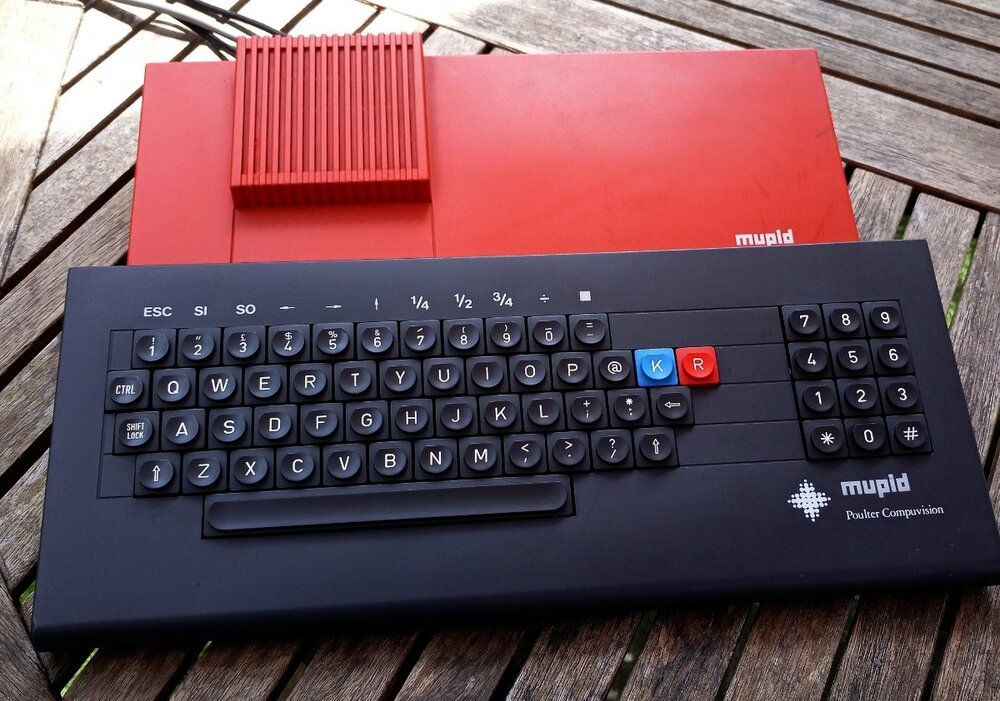
Yeah, probably cost a pretty penny at the time. They were used as Prestel terminals, used in the Austrian post offices. More info here if anyone is interested... https://www.old-computers.com/museum/computer.asp?c=1112
-
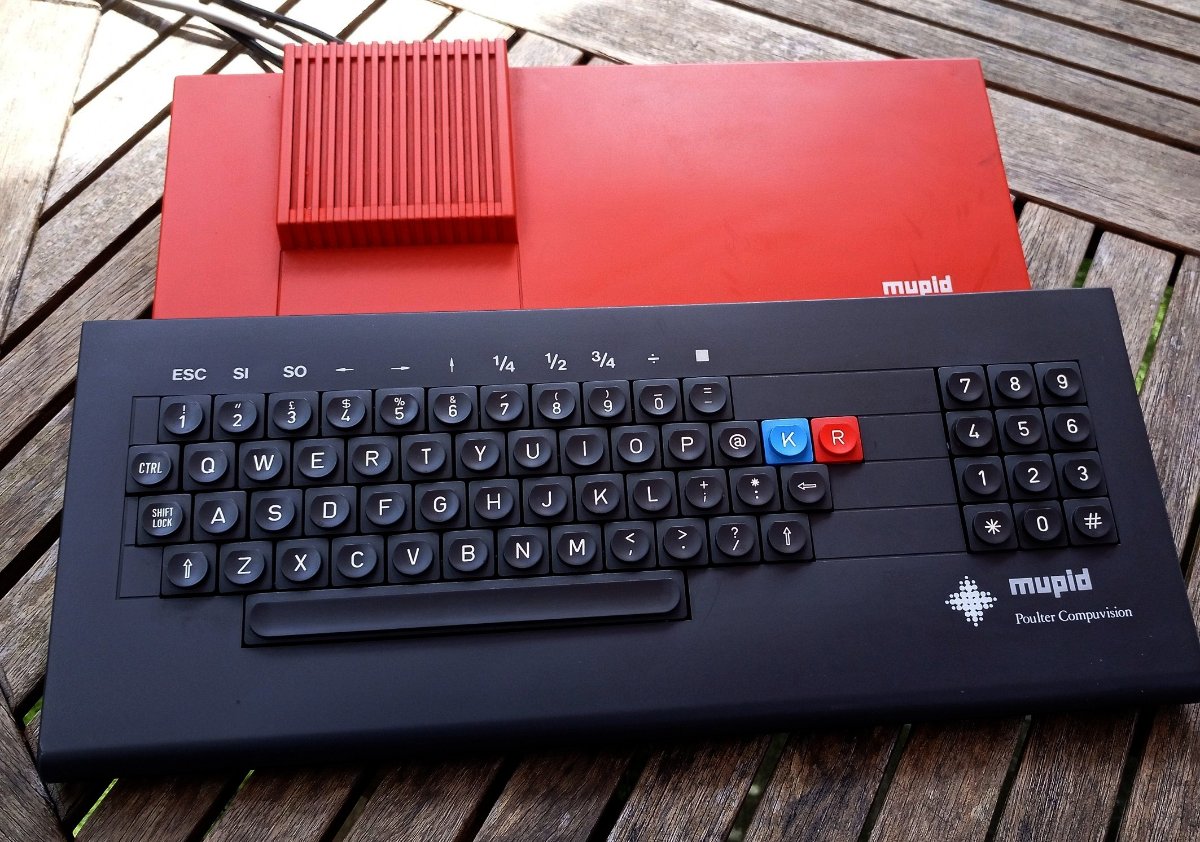
I just came across the Mupid C2D. It's an Austrian built computer and pre-dates both the QL and the PCN magazine cover. Released in 1981, before even the ZX Spectrum. It used a Z80A, had 128K memory, and a super impressive palette of 4096 colours. A very striking resemblance to the QL design. The rounded flat-top keys, black plastic, and even the horizontal lines. They were also rebranded as Siemens machines, so JianYang was onto something!
-
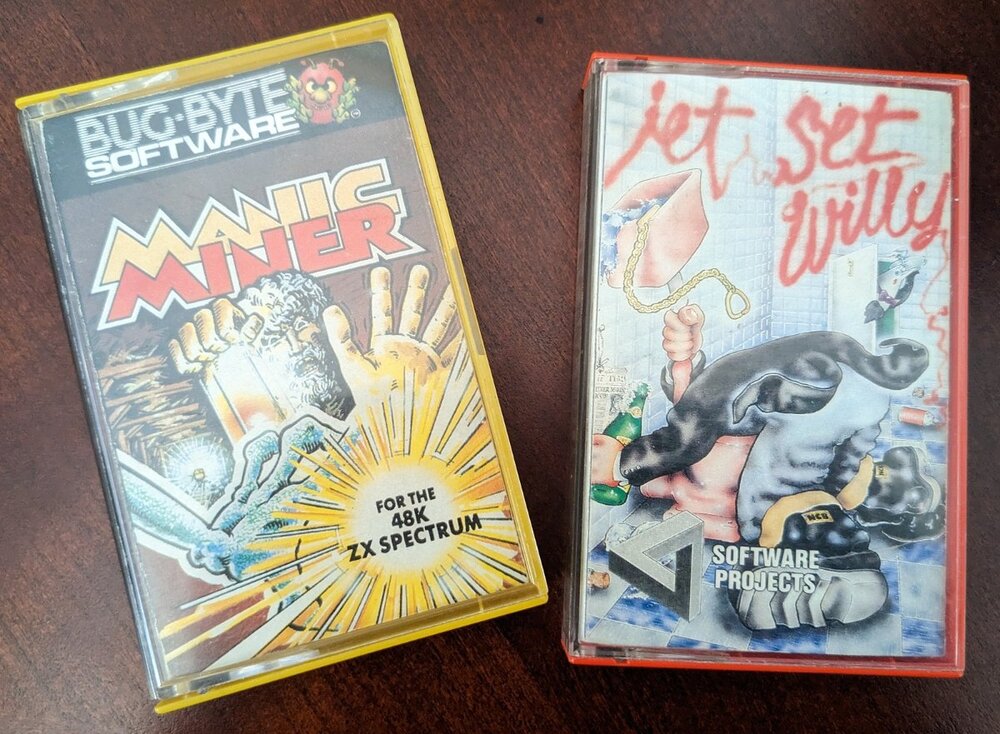
I don't really associate many Christmas memories directly with MM or JSW. I was an early adopter of the ZX Spectrum. Must have been late 1982, or early 1983. My dad came home a shiny new ZX Spectrum 48K, but it just sat in the box for ages. We were not really excited, since I was young and not even 100% sure what a computer was for, or why you would even need one. We tried some of the bundled games it came with, but there were not great. Also, the thought of reading a thick manual or programming code didn't really appeal to kids back then (does it now?). That said, I did own a Big-Trak already, so I knew programming had potential. This all changed when MM was released (Summer 83). I remember playing MM at first on a tiny B&W TV. When we switched to a colour TV, I was blown away by the vibrant colours! Oddly, I soon realized that I was not very good at playing MM, and my brother was much better. I was content with watching, and helping him to progress through the levels. We never actually finished it, but I remember getting pretty close. Annoyingly, you only had a few lives, and had to start over and loose all your progress. I was very impressed by the simplicity of these games, that got you coming back for more. Some other games from that period I have fond memories of are... Ant Attack, Oracle's Cave, 3D Maze of Gold, Chequered Flag, Ground Attack, The Horace trilogy, Jason's Gem, Lunar Jetman, Moon Alert, Maziacs, Stop the Express, Time-Gate, Zzoom. I remember going to places like WH-Smith's, Woolworth's (even Boots!). Those places back then were a wonderland for kids, and had a good selection of ZX tapes, and would lure you inside with amazing toys and new technologies. We would always get new cassettes for Christmas, and then spend endless hours trying to figure them out. The tape player's would always drive us crazy. Either the game would refuse to load, or the tape would get chewed up. I remember going to some other kid's house (must have been around 1985) and finding out about the 6031769 and WRITETYPER cheats. This was exciting stuff! We had not played MM/JSW in ages, and then discovering that cheats had been built into the games all this time, without any Pokes! I kept with the ZX Spectrum through most of the 80's (my brother got a Spectrum+, then I got a +2), but they started to collect dust after a while. I bought a friends CPC-464 around the late 80's, which was pretty neat and the audio being superior to the ZX. By 1991, I had moved onto Amiga's, and by 1995 I was using a combination of Amiga & PC's. I would say that some of the best memories I have are that of the ZX Spectrum and playing those early games. My brother has lots of the old ZX tapes we used to play, but I kept hold of MM and JSW.
-
True, it could be a mock-up. Obviously the key layout has been altered. For all we know, the mock-up could have been created by the Sinclair QL dev team 😁
-
Thanks. Yes, the key-caps (rather than the layout). I know the Siemens PG7xx series laptops had rounded key-caps similar to the QL, but they were produced in the 90's. It's possible that Siemens also had earlier machines (and keyboards) that were produced in the 80's.